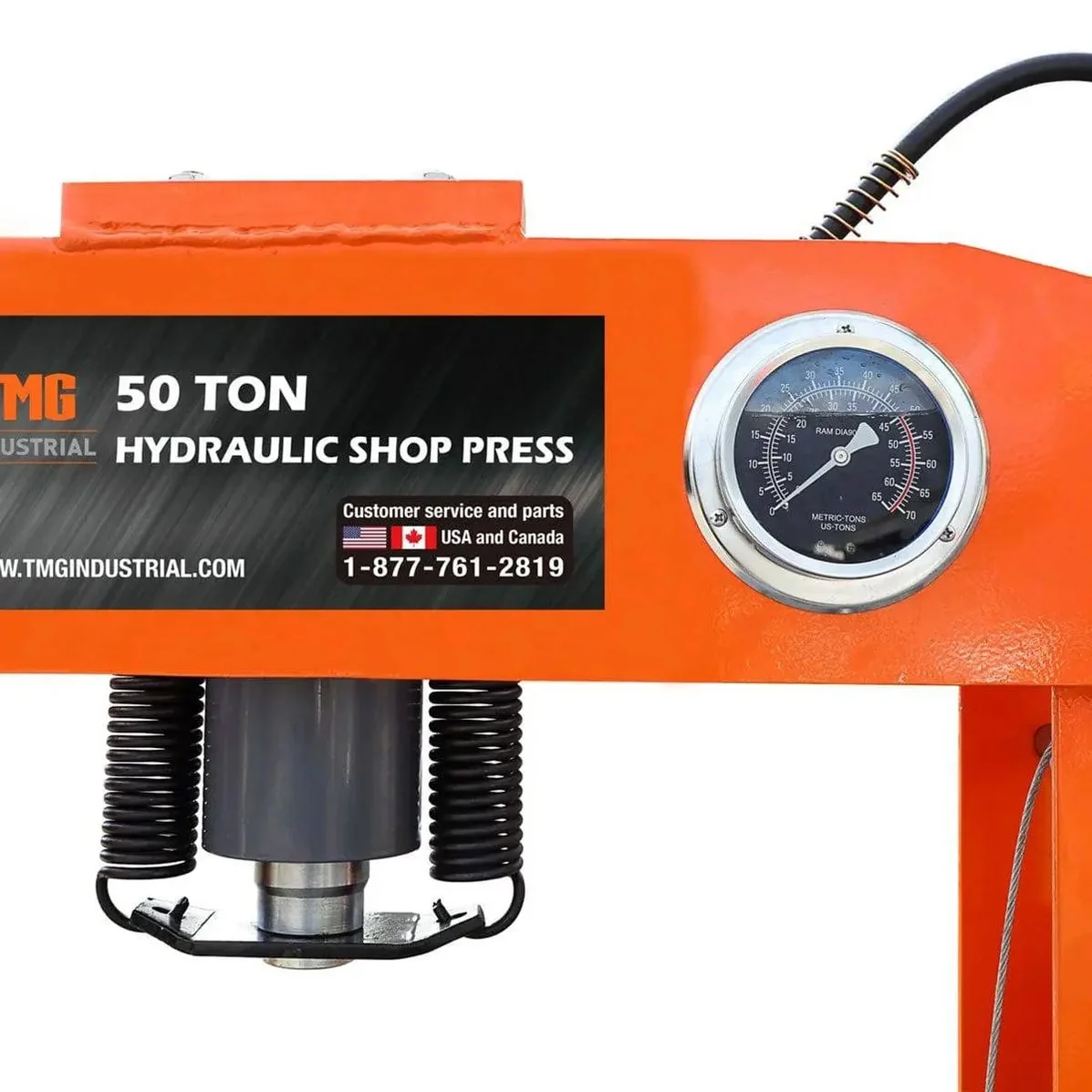
The awkward part of pressing has always been arithmetic about hands
Australian workshops overhaul machinery through the last weeks of winter, and pressing work fills the bench. A air hydraulic press driven by an air over hydraulic pump changes something that has nothing to do with force, which is how many hands the operator has available.
On a manual press a hand pump occupies one arm completely. That leaves a single hand to hold the workpiece, steady the adapter, and keep the whole arrangement square, which is one hand fewer than the job has ever really needed.
A foot pedal puts the operator back at the work
Driving the ram of an air hydraulic press from the floor frees both hands for the part. The operator can hold a bearing square to its housing with one hand and support the shaft with the other while the ram comes down, watching the alignment rather than the pump handle.
Alignment is where pressing jobs are won or lost. A component that starts even a little out of square will cock in its bore and either jam or damage the housing, and it is the moment of first contact that decides which of those happens.
Compressed air removes the limit that was the operator
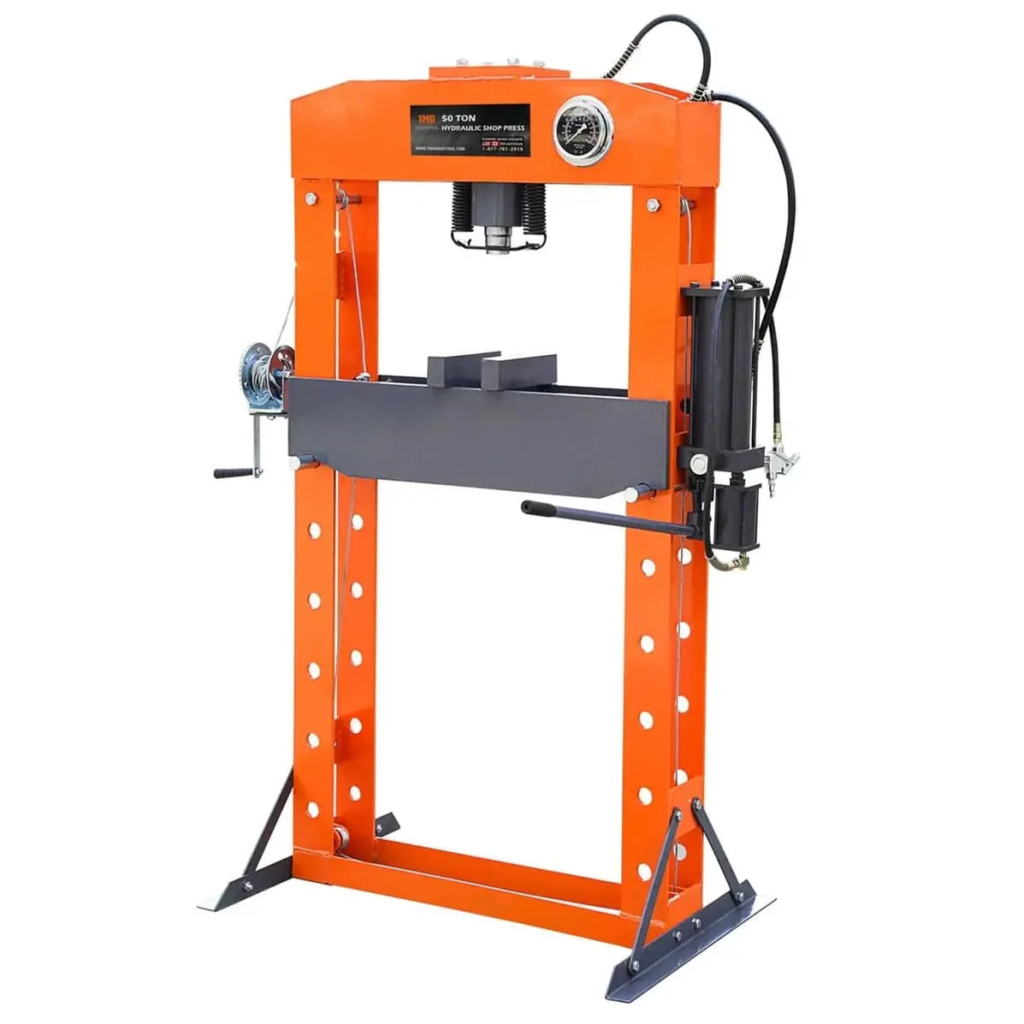
A manual pump moves a small volume with each stroke, and reaching full pressure on a large ram takes a great many of them. An air hydraulic press cycles continuously, which means the difference between fifty tons and fifty strokes is no longer a physical effort.
Speed cuts in both directions
The pause between hand strokes is also a chance to notice something moving the wrong way. Under continuous pressure an air hydraulic press keeps advancing while the operator is still deciding, and overshooting a pressing job takes a fraction of a second.
The habit that answers this is to work in short bursts. Pressing a little, releasing the pedal, and looking is slower than holding it down and considerably faster than repairing a housing that has been driven past its shoulder.
The hand pump has not gone away, and should not
An air hydraulic press keeps a manual lever, which matters on a farm workshop where the compressor is at the other end of the shed or has been taken to a paddock. It also gives fine control for the last part of a delicate press.
Presses divide by what drives the ram
- Hand pump: cheap, slow, one arm occupied
- Air over hydraulic: both hands free, fast cycling
- Electric power pack: fastest, needs a supply
Where the air option pays and where it does not
- Strength: both hands available for alignment
- Strength: full tonnage without physical effort
- Limit: easy to overshoot under continuous pressure
- Limit: needs compressed air within reach
Weighed against a hand operated frame, an air hydraulic press costs an air line and returns control over the part rather than over the handle. A machinery repairer near Wagga fits every bearing with a foot on the pedal and both hands on the job.
Workshop equipment is being judged on how it is operated
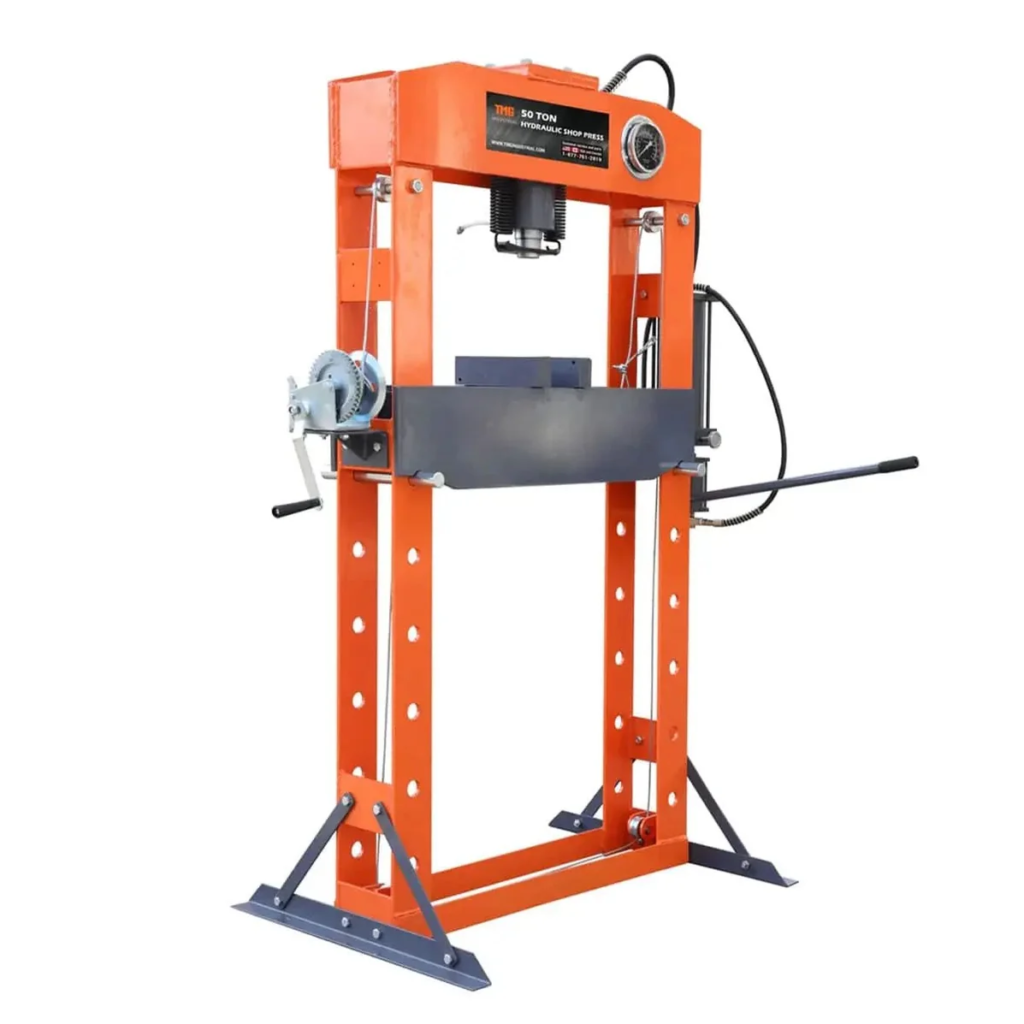
Buyers increasingly compare how a machine is controlled rather than only what it can produce, having noticed that the specification which changes the working day is usually the one governing where the operator’s hands and eyes end up.
That attention to operation is why the workshop equipment TMG Industrial supplies pairs its capacity with the controls that let an operator use it properly.
Leave a Reply