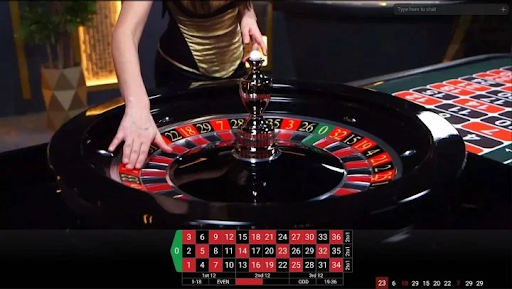
Put aside common stereotypes for a moment. In practice, roulette is a structured and repetitive type of game. Even on an IPL online betting app, opening live roulette for the first time usually causes less confusion than expected and more surprise at how straightforward the mechanics are.
There is a wheel. There is a ball. There is a numbered table. You place a chip on a section of the layout. The dealer spins the wheel. A few seconds later, the round ends.
European roulette includes 37 pockets numbered from 0 to 36. American roulette adds a 00, increasing the total to 38 pockets. Why does that matter? Because the extra pocket increases the house edge. European roulette operates with roughly a 2.7% house advantage, while American roulette sits above 5%. Over dozens or hundreds of spins, that mathematical difference becomes significant.
If you have a choice, European roulette is usually the more efficient option from a probability standpoint.
Each round follows the same pattern:
- Betting window opens (usually it`s about 10-20 seconds).
- Players place chips.
- Dealer announces “No more bets.”
- Wheel spins.
- Result is declared.
No hidden mechanics. No shifting odds. Just repetition.
The table looks complex but isn’t
At first glance, the layout seems overwhelming. Do you need to understand every number? Not at all. The bets fall into two clear categories.
Outside bets:
- Red or black.
- Odd or even.
- 1–18 or 19–36.
These cover large sections of the wheel and pay 1:1.
Inside bets:
- Single number (pays 35:1).
- Split (two numbers).
- Street (three numbers).
- Corner (four numbers).
Inside bets offer higher payouts but significantly lower probability. So what should a beginner do? Even on an ipl online betting app, it makes sense to start broad. Outside bets allow you to understand pacing without large variance. Once you’re comfortable, you can experiment with smaller, more precise selections. Do you need a system? Not necessarily. What you need is clarity about risk.
What changes in a live format
In roulette live, a real dealer operates a physical wheel in a studio environment. The session is streamed in real time. You can see the wheel. You hear the ball. You observe the dealer closing bets.
Does that change the math? No. But it changes pacing. The short countdown before each spin creates a defined structure. You are not clicking every three seconds as in some automated digital versions. You have a window to decide. Then the decision is locked.
That timing affects behavior. It reduces impulsive rapid betting and introduces a pause between rounds, much like the structured flow users see on pages such as https://ind-1x-bet.com/en/line/cricket/988155-indian-premier-league. Most live tables also show recent results on screen. It’s important to remember that these are historical outcomes only. They do not influence future spins. Each round is independent. If red appeared five times in a row, does that increase the chance of black? Statistically, no. The probability remains the same.
A practical approach
Instead of searching for patterns, define your structure.
- Set a fixed session budget (₹500, ₹1000, or any amount you are comfortable losing).
- Choose European roulette if available.
- Start with outside bets.
- Decide on a time limit (20-30 minutes is common).
- Avoid increasing stake sizes after losses.
Why avoid progressive systems like doubling after each loss? Because streaks happen.
Online access makes roulette available at any time. That convenience changes behavior. Without physical chips in hand, digital balances can feel abstract. ₹1000 becomes a number on a screen rather than something tangible. That’s why pre-set limits are more important than betting formulas.
Managing expectations
A structured session has a beginning and an end. Maybe you stop after doubling your balance. Maybe you stop after reaching your predefined loss limit. The key is deciding before the session starts.
When you approach roulette as a repetitive probability cycle bet, spin, result rather than a puzzle to solve, the decision-making becomes simpler. No pattern hunting. No reactive doubling. Just defined risk. That clarity doesn’t guarantee wins. But it does reduce unnecessary mistakes. So in roulette, reducing mistakes is often way more significant than trying to predict the next number.
Leave a Reply