Bookmaker Odds Guide – Football Lines & Betting Insights
Bookmaker Odds Guide rakhoi TV – Football Lines & Betting Insights explains how to read football betting prices, understand the markets behind them, and compare odds with care. Bookmaker odds show the payout attached to a particular outcome, but they also reflect the bookmaker’s assessment of probability and its margin. Knowing how lines work can help you make more informed decisions without treating betting as a guaranteed way to make money.
What Football Odds Mean
Football odds are prices offered on possible events, such as a team winning, a match ending in a draw, or a total number of goals being scored. A bookmaker sets prices using probability estimates, market information, and its commercial margin. Odds can change as new information arrives or as customers place bets.
Decimal Odds
Decimal odds are widely used because they make potential returns straightforward to calculate. Multiply the stake by the decimal price to find the total payout, including the original stake. For example, a $10 bet at 2.50 odds would return $25 if it wins, which includes $15 in profit and the original $10 stake.
Higher decimal odds indicate a larger potential payout but usually correspond to a lower estimated chance of the outcome. Lower odds suggest a more likely outcome but offer less profit relative to the stake. These prices are not promises: a strong favorite can still lose, and a long shot can win.
Fractional and American Odds
Fractional odds, such as 3/1, express potential profit in relation to the stake. At 3/1, a $10 winning bet earns $30 in profit, plus the returned stake. American odds use positive and negative numbers. A price of +200 shows the profit from a $100 stake, while -150 indicates how much must be staked to earn $100 in profit.
The same underlying market can be displayed in different formats. Before placing a bet, check which format the bookmaker uses and whether the displayed figure represents profit only or total payout.
Understanding Football Lines and Markets
A football line is the price or handicap attached to a betting market. Some markets ask you to predict the match result; others focus on goals, margins, or specific events. The line can change, so the price available when you place a bet may differ from an earlier quote.
Match Result and Draw No Bet
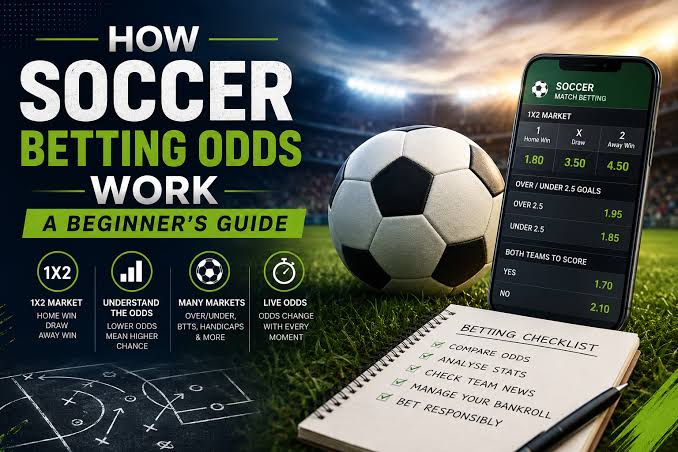
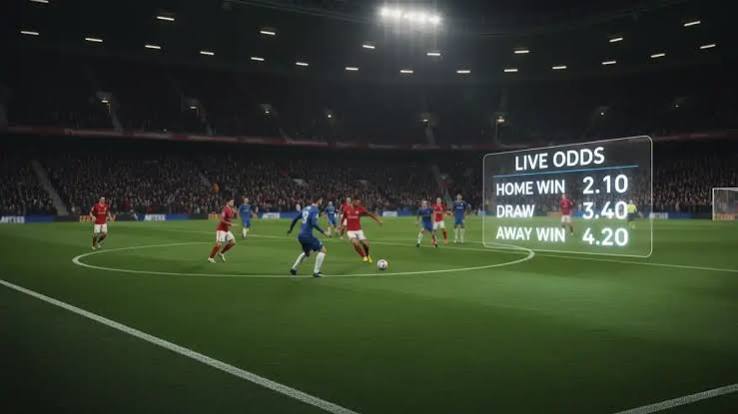
The traditional 1X2 market covers a home win, a draw, or an away win. The “1” refers to the home team, “X” to a draw, and “2” to the away team. In leagues where matches can finish level, the draw is a separate outcome rather than a tie-breaker.
Draw no bet removes the draw as a losing result. If the match ends level, the stake is typically returned; if either team wins, the bet is settled on that result. Because the draw is taken out of the market, the odds will differ from standard match-result prices.
Handicap and Goal Markets
A handicap adjusts the starting position of a team for betting purposes. In a European handicap, the adjusted result usually has three possible outcomes, including a draw after the handicap is applied. Asian handicap markets commonly use whole, half, or quarter-goal lines. Depending on the line and result, a bet may win, lose, or have some or all of the stake returned.
Over/under markets set a goal total, such as 2.5. An over bet wins if the match contains at least three goals, while an under bet wins if it contains no more than two. A half-goal line avoids a push, while a whole-goal line can result in a refunded stake if the match lands exactly on the specified total.
How to Read and Compare Odds
Comparing prices requires more than looking at the biggest number. Odds reflect probability in an imperfect way, and bookmakers include a margin in their markets. That margin means the combined implied probabilities across all possible outcomes generally exceed 100 percent.
Convert Odds into Implied Probability
For decimal odds, divide 1 by the odds and multiply by 100 to estimate the implied probability. At 2.00, that calculation gives 50%. This is a raw estimate, not an exact forecast, because the bookmaker’s margin is built into the prices. For example, in a two-outcome market, the implied probabilities for both sides may add up to more than 100%.
If you compare prices across bookmakers, make sure the market and settlement rules match. A price for a team to win in regular time is not identical to a price that includes extra time. Likewise, check whether a listed total applies to the full match or a particular half.
A Practical Process for Evaluating a Line
Use a consistent process before deciding whether a price is worth considering. The following sequence helps separate the odds calculation from the football analysis:
Identify the exact market and settlement rules, including whether the price covers regular time, extra time, or a specific period.
Convert the decimal odds into an implied probability, then consider whether that estimate seems reasonable in light of your own research.
Compare the same selection and market with other available prices, accounting for any differences in rules or fees.
Review relevant context, such as confirmed lineups, injuries, schedule congestion, and recent tactical changes, without assuming past results guarantee future performance.
Decide on a fixed stake in advance and avoid increasing it to recover previous losses.
This process does not ensure a winning bet. It simply encourages clear comparisons and helps reduce decisions made in response to excitement or pressure.
Price Changes and Common Betting Mistakes
Odds move when bookmakers revise their estimates, information changes, or betting activity shifts the market. A key player being ruled out may affect a team’s price, while a line may also move because of broader market demand. A shorter price is not proof that an outcome is certain; it means the bookmaker is offering a lower payout relative to the stake.
One common mistake is choosing a bet only because the odds look attractive. A large payout may reflect a genuinely unlikely outcome, and a short price can still offer poor value if the chance of success is lower than the price implies. Another is comparing incompatible markets, such as full-time result odds with a market that includes extra time. Always read the market name and settlement terms.
Keep a record of bets and stakes if you want to review your decisions. Track the market, odds, and reasoning rather than judging a process solely by a small number of wins or losses. Short-term results can be heavily affected by chance.
Responsible Use of Bookmaker Odds
Odds are useful for understanding prices, not for eliminating uncertainty. Set limits on both time and money, and only bet with funds you can afford to lose. Never borrow to gamble or chase losses by raising stakes. If betting stops feeling recreational or begins to affect your finances or wellbeing, pause and seek support through a trusted person or a local gambling-help service. Age restrictions and betting laws vary by jurisdiction, so use only legal services where you live.
Conclusion
A bookmaker Tỷ lệ kèo odds guide is most useful when it clarifies how prices, implied probability, football lines, and market rules fit together. Decimal, fractional, and American formats express potential returns differently, while match-result, handicap, and goals markets each settle in distinct ways. Compare like-for-like prices, account for bookmaker margins, and use a consistent process rather than treating odds as predictions or guarantees. Set firm limits and remember that even carefully researched bets can lose.