Live Football Odds – Real-Time Markets & Match Updates
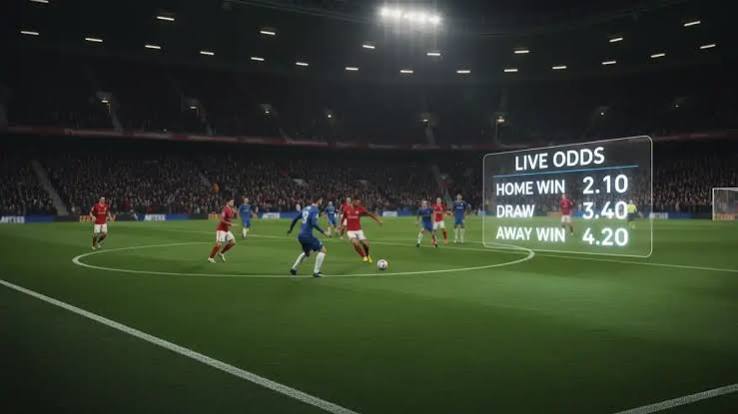
Live Football Odds rakhoi TV – Real-Time Markets & Match Updates refers to betting prices that change while a football match is being played, alongside the score, clock, events, and market availability that help explain those changes. Understanding how in-play odds work can make it easier to read a live market, compare possible outcomes, and recognize why prices may move quickly. Odds are not predictions or guarantees: they represent changing market prices and involve risk.
What Live Football Odds Mean
Live football odds, also called in-play odds, are prices offered on match outcomes after a game has started. Unlike pre-match odds, they respond to what is happening on the pitch. A goal, red card, penalty, injury, or long period of pressure can cause prices to shift within seconds. The odds available depend on the competition, the betting provider, and local rules.
How odds express probability
A price indicates how much a successful selection could return relative to a stake, while also reflecting the provider’s assessment of the event and its margin. In decimal format, a $10 stake at odds of 2.00 would return $20 in total if successful, including the original stake. Decimal odds can be converted into a rough implied probability by dividing 1 by the odds: 2.00 suggests 50% before accounting for the provider’s margin.
That figure is not an objective forecast. Different providers may show different prices, and the implied probabilities across all outcomes in a market usually add up to more than 100% because of the margin. Odds also change as new information becomes available.
Why prices move during a match
Live pricing systems use match data, statistical models, and information about market activity. A goal often moves the odds sharply because it changes the score and remaining time. A red card may also alter prices because one team must continue with fewer players. Even without a decisive event, the clock matters: a leading team’s price may shorten as time runs out, while a trailing team has less time to equalize.
Common In-Play Markets
Live markets cover more than the final result. The options and names may differ between providers, so check the market description before placing a bet. The examples below explain what common markets generally mean; they do not indicate which selection is likely to win.
Reading a market in context
The match score alone does not explain a price. For example, a team leading 1–0 late in the game may be priced differently from a team leading by the same score early in the first half. The time available for the opponent to respond is different. Similarly, a 0–0 score can involve very different match conditions depending on chances created, dismissals, or injuries.
Some markets may be suspended briefly after a major incident. This can happen while a provider confirms the event or recalculates prices. A selection shown again after the pause may have a different price or conditions, so review the details before acting.
How to Follow Live Odds and Match Updates
For a clearer view of an in-play market, combine the odds display with a reliable match tracker or broadcast. Updates can arrive at different speeds, and a text feed may not be synchronized with an official data source or television coverage. These steps help you interpret what is shown without assuming that every update is instantaneous.
A practical step-by-step approach
Confirm the fixture and market. Check the teams, competition, match clock, score, and the precise outcome covered by the selection.
Check the update time. If available, look for the timestamp or live status. A delayed score feed can make an otherwise accurate price appear surprising.
Read the odds format. Identify whether prices are decimal, fractional, or American. For decimal odds, multiply the stake by the price to calculate the potential total return, including the stake.
Consider the match situation. Look at time remaining, cards, substitutions, and confirmed events. Treat commentary and statistics as context, not certainty.
Review the price before confirming. Live odds may change between selecting an option and submitting it. Check the final price and the bet details shown by the provider.
Handling delays and suspended markets
If the score or clock seems inconsistent with another source, refresh the page or app and check an official competition or broadcaster update. Do not assume a market is still open at the price first displayed. Providers may suspend betting during a penalty, goal review, or other significant event; wait for the market to reopen and verify the terms and price. If there is a dispute, keep the relevant confirmation details and consult the provider’s published rules.
What Can Influence Live Prices
Numerous factors can affect odds, and their importance varies by market. A goal changes the score directly, while a red card can alter a team’s ability to defend or attack. Substitutions, injuries, weather, tactical changes, and the amount of time left may also matter. Statistical indicators such as shots or possession can add context, but they do not guarantee future goals or a particular result.
Price movement is not proof of certainty
A large odds movement signals that the market price has changed; it does not prove that an outcome is inevitable. Prices can move quickly in response to a goal and then shift again as teams adjust. A shorter price generally means a lower potential return relative to the stake, not a promise of success. Likewise, a longer price does not automatically represent good value.
Responsible Use of Live Betting Information
In-play betting can feel especially urgent because prices and match events change rapidly. Set a budget and time limit in advance, and do not chase losses or increase stakes to recover money. Consider following the match for information without placing a bet. Use only services legally available where you live, and check their rules, fees, and support options. If gambling is affecting your finances or wellbeing, stop and seek help from a local support service.
Conclusion
Live football odds Tỷ lệ kèo are changing prices attached to match outcomes and other in-play events, shaped by the score, clock, incidents, and available information. To understand them, identify the market, read the odds format, confirm the match update, and interpret price changes in context rather than as guarantees. Since live data can be delayed and markets may pause or reprice, check details before making a decision and keep any betting within clear limits.